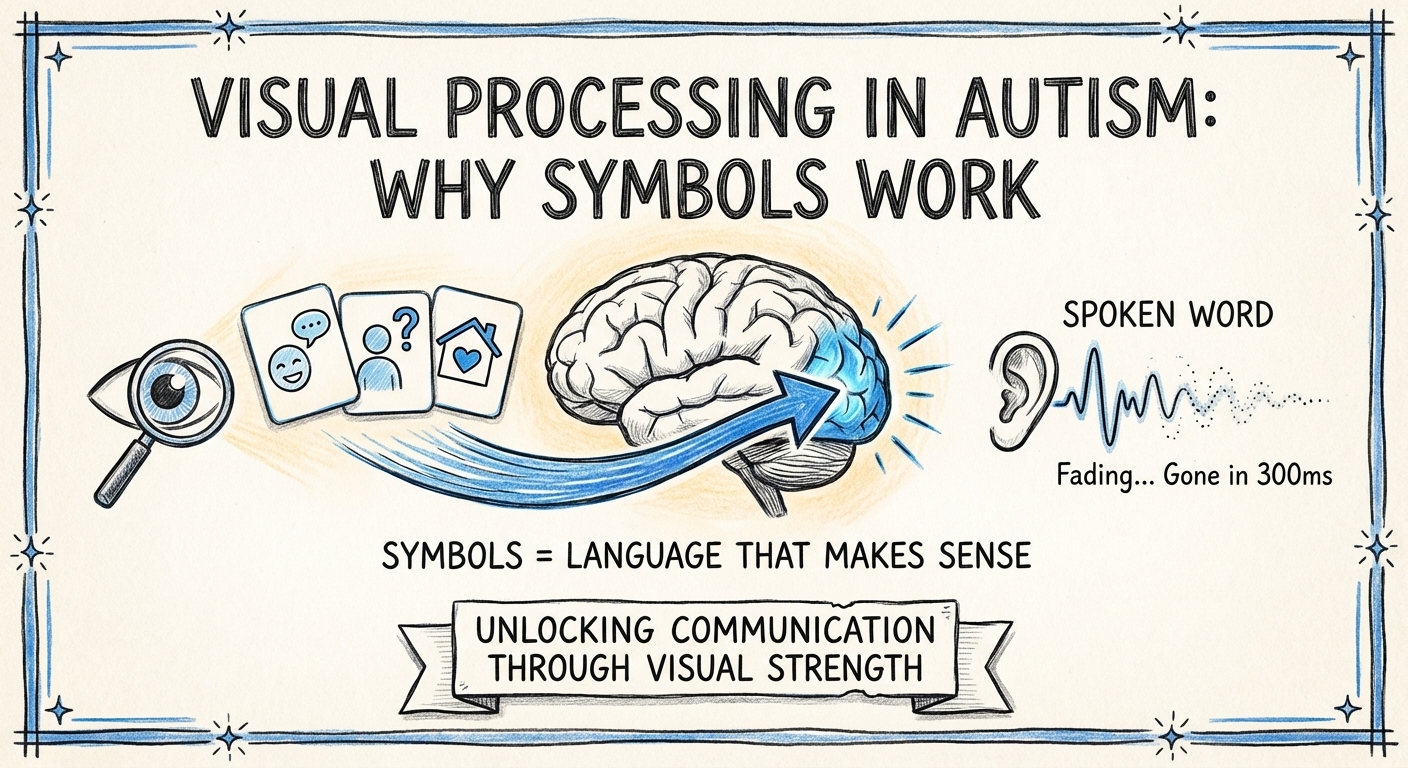
Visual processing plays a crucial role in how effectively someone can use an AAC system. Understanding the visual challenges your child or client faces can help you choose the right symbols and presentation style.For many autistic individuals, visual processing isn't just a preference — it's a neurological strength. Understanding this helps explain why symbol-based communication works so effectively.
AAC stands for Augmentative and Alternative Communication. Augmentative means supporting existing speech. Alternative means providing a different way to communicate when speech isn't possible. AAC provides a pathway that works with the brain rather than against it.
How the brain processes visual and auditory information
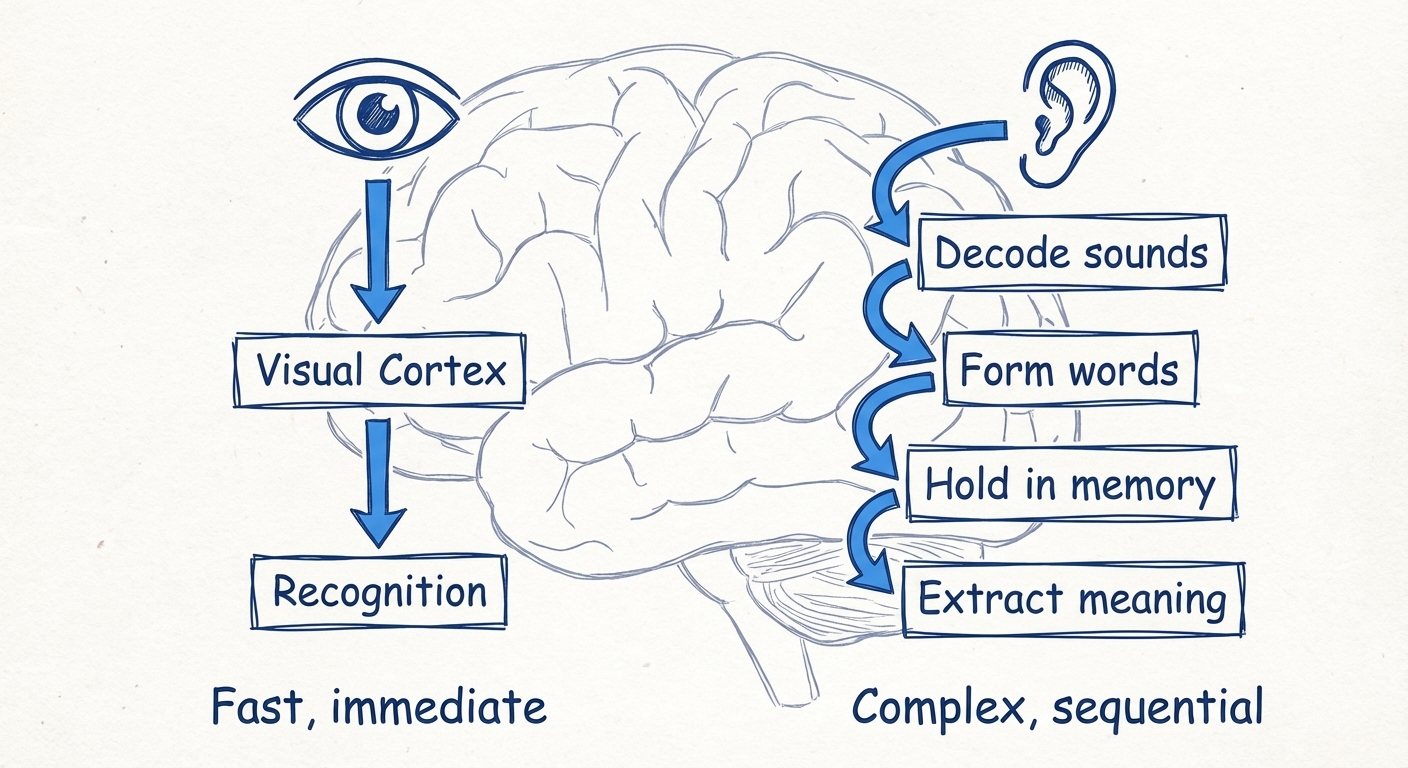
Visual information travels to the visual cortex and is processed with remarkable speed. We recognise faces in milliseconds. We interpret scenes almost instantaneously.
Auditory processing is more demanding. The brain must decode sounds into words, hold them in working memory, extract meaning, and do this in real time as more words arrive. For many autistic individuals, this is where things become difficult.
Visual processing, by contrast, often remains strong — in some cases, significantly enhanced.
The autistic visual advantage
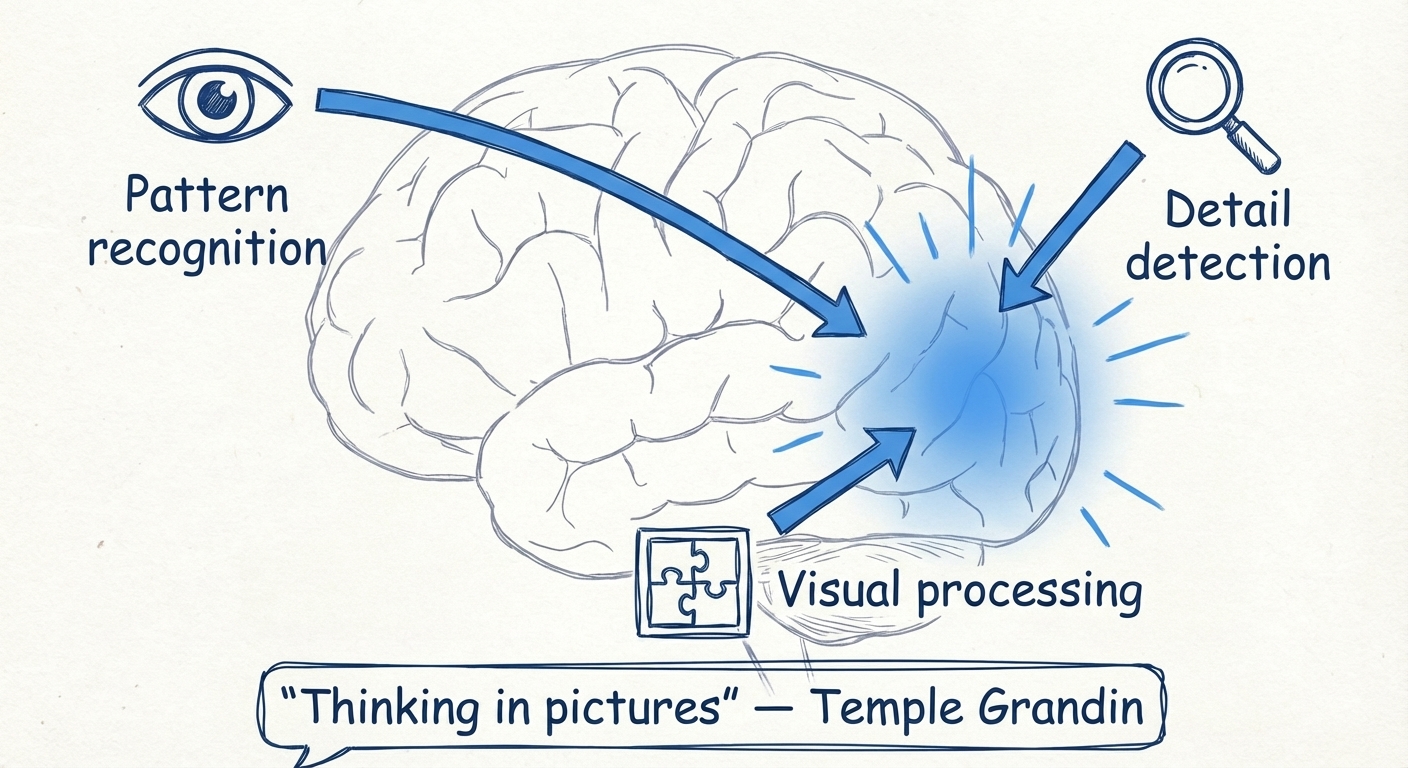
Research shows many autistic individuals outperform neurotypical controls on visual tasks: identifying patterns, detecting details, processing information without distraction.
Temple Grandin describes her thought process as watching a film rather than hearing an internal monologue.
If the brain naturally gravitates toward visual information, then presenting language visually as symbols aligns with how it already works.
Why symbols make sense
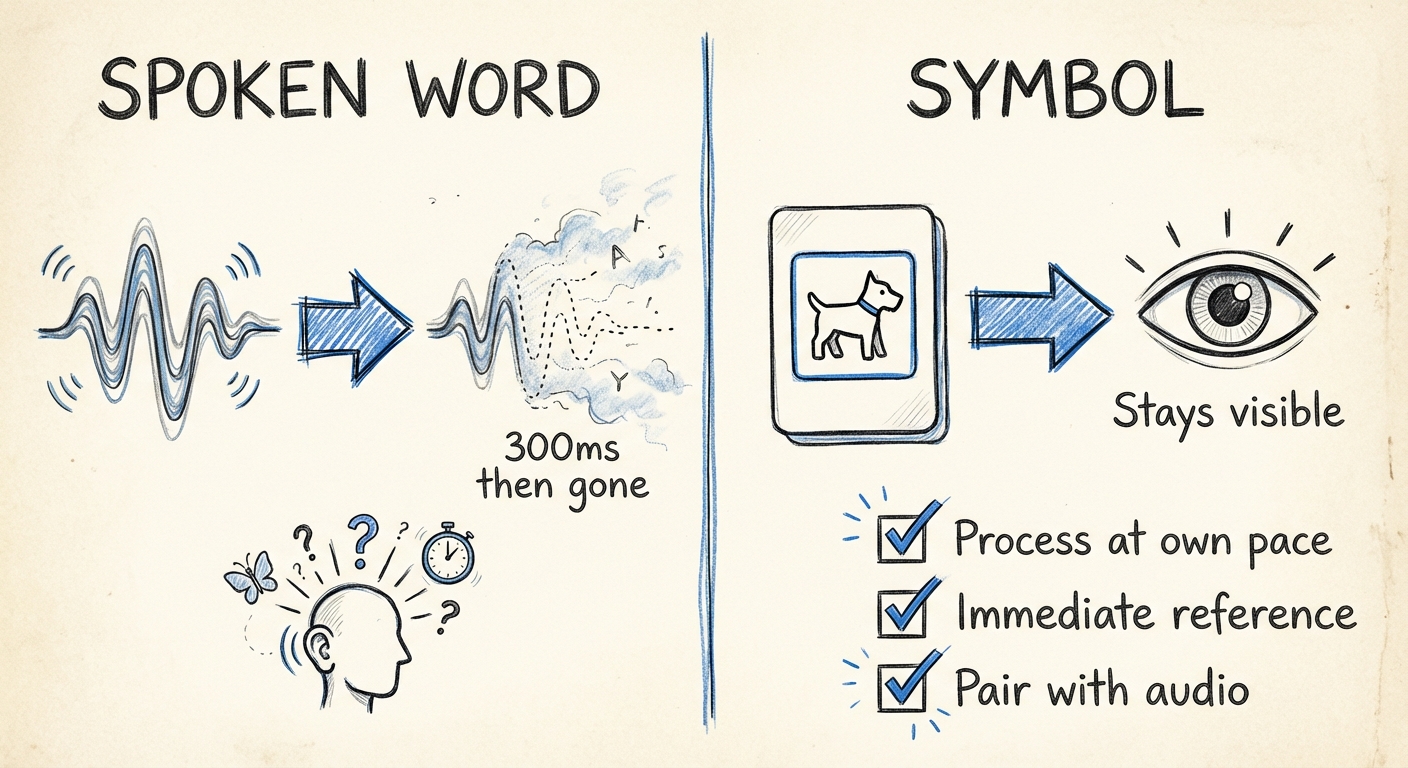
A spoken word lasts 300 milliseconds then disappears. If attention lapses, it's gone.
A symbol:
- Remains visible as long as needed
- Provides immediate visual reference
- Reduces demand on auditory processing
- Can pair with audio, reinforcing through multiple channels
AAC takes the invisible nature of spoken language and makes it concrete and visible.
Dual coding
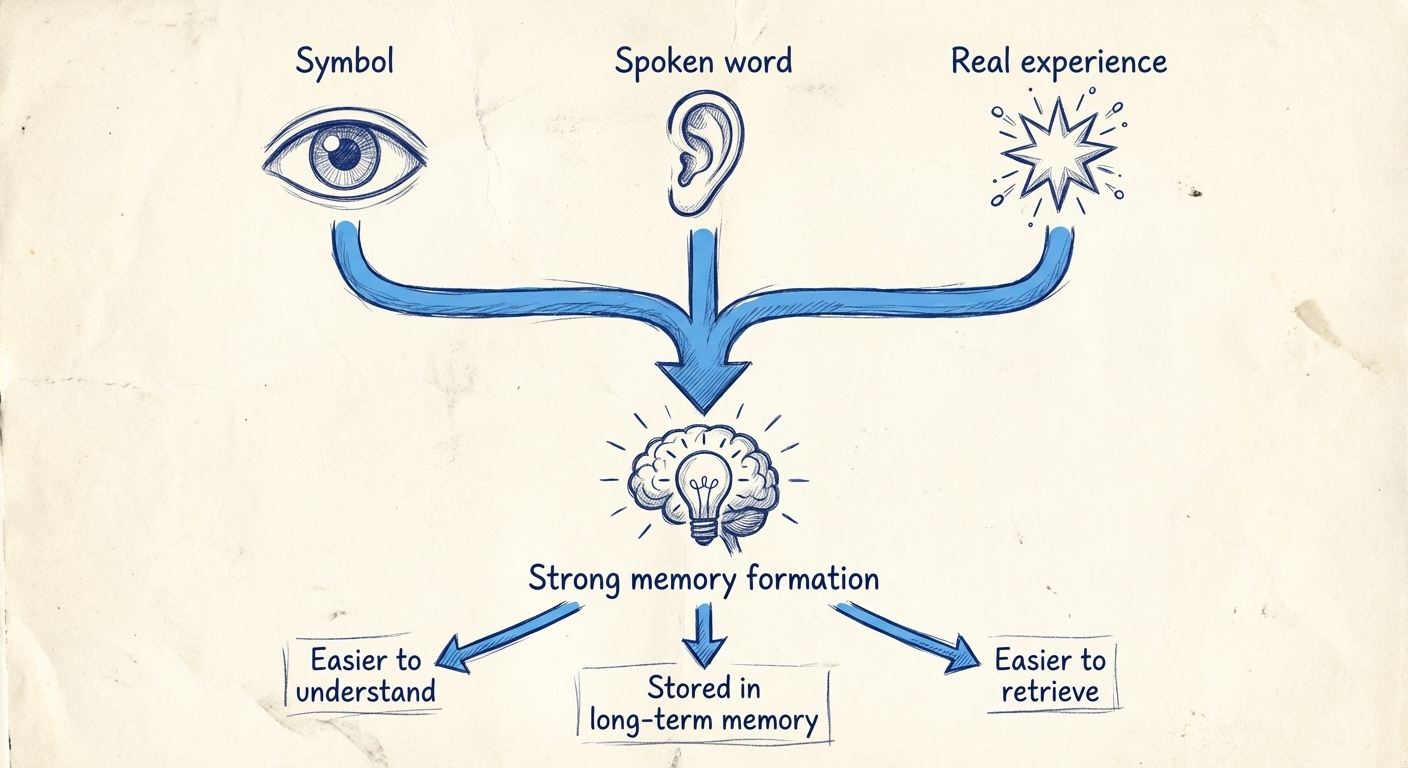
When we show a symbol while speaking the word, the brain encodes information through two channels. Dual-coded information is easier to understand, more likely to be stored in long-term memory, and easier to retrieve.
For modelling, this is essential. Symbol, spoken word, and real experience converge, creating the strongest foundation for learning.
AAC works because it meets the brain where it's strongest. For those who experience the world in images, symbols provide a language that makes sense.